
It’s time for your monthly self-check.
It’s time for your monthly self-check. Taking a few minutes to look at your vulva can help you notice early changes and protect your health. Not sure where to start? Here’s a…
It’s time for your monthly self-check.
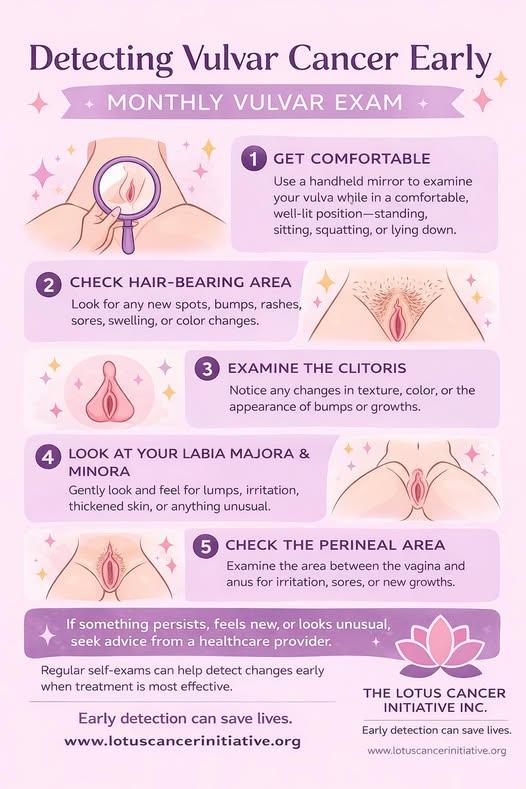
Taking a few minutes to look at your vulva can help you notice early changes and protect your health. Not sure where to start? Here’s a simple guide:
Get into a comfortable position
Use a handheld mirror while standing, sitting, squatting, or lying down — whichever allows you to see clearly.
Look at the hair-bearing skin
Notice any new spots, rashes, sores, swelling, or color changes.
Check the clitoral area
Look for differences in color, texture, or any new bumps or growths.
Examine the outer lips (labia majora)
Gently look and feel for lumps, irritation, thickened skin, or anything unusual.
Examine the inner lips (labia minora)
Pay attention to any changes from what is normal for you.
Don’t forget the perineal area
Check the skin between the vagina and anus for irritation, sores, or new growths.
If you notice something new, persistent, or unusual, seek medical advice.
Many vulvar conditions are easily treated, and cancers detected early are highly manageable.
Remember: There is no routine screening test for vulvar cancer. Knowing your own body and reporting changes early can make a life-saving difference.
Please share to help raise awareness and support women’s health.
— The Lotus Cancer Initiative Inc.
Early detection saves lives.